Understanding Surface Weight
And how I feel about degrees/spans
There seems to be a divide in the surfacing world when it comes to the use of degrees and spans. When learning in a traditional way, you are taught to avoid the overuse of them as it can cause unnecessary knots, harsh surface flow and can trip up functions like Align to create unfavorable results. I recently learned how to create a G3 surface with just 3 degrees, a feat I found quite exciting. I will provide the example below. These curves can always improve, even now looking at the corrected circle on the right I can tell there's a slight peak at the CV intersections.
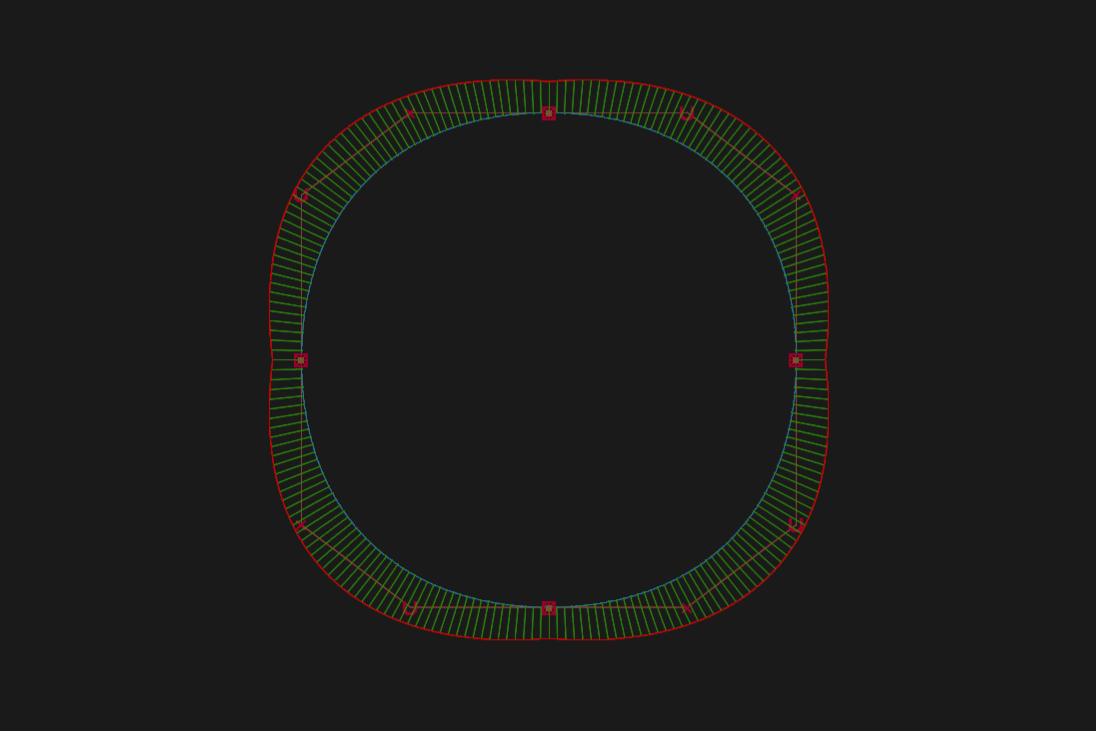
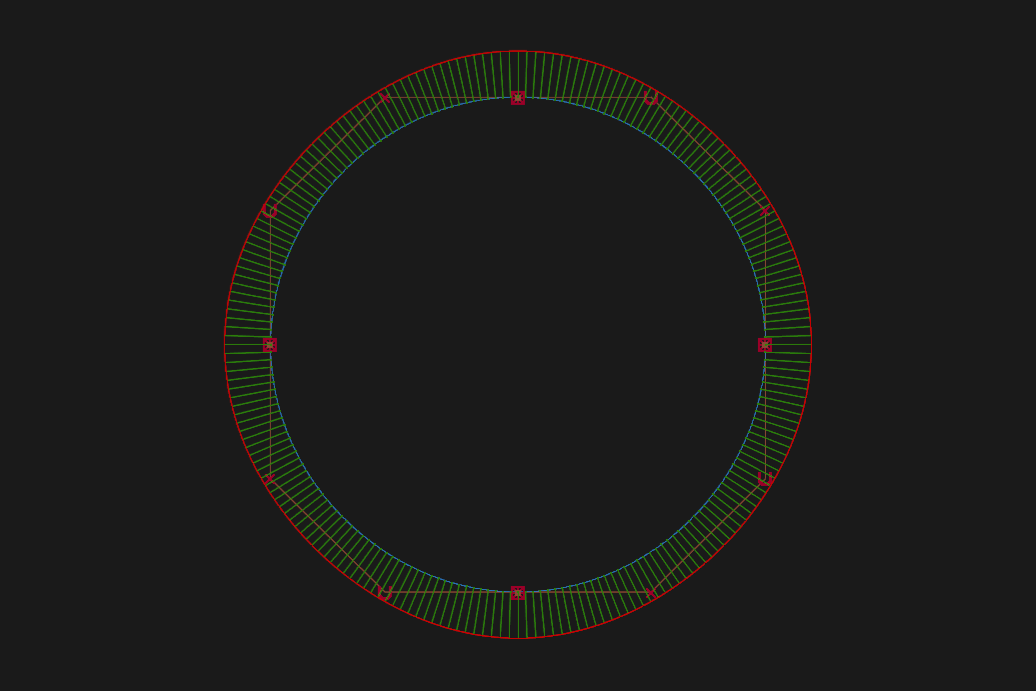
However, after speaking to some active surfacers in the industry, it was explained that this was essentially a waste of time to achieve. That Alias is a much smarter software now, that it can can use extra degrees and no problems should arise later on. This is of course with the constraint of having very clean and instructed surface theory. This was also during a discussion about the use of spans, and how being “spanless” is not so important anymore so long as the highlight/renderings and curvature combs confirm a clean and continuous surface has been achieved.
An example of this was creating a rounded cap surface. It was explained to me that revolving a curve around a vertex it touches, with 4 segments in this instance, wouldn't be considered a flawed method. This creates four 3-sided surfaces; a structure I had always had been instructed to avoid in my self-directed training, but was now being taught otherwise. It makes me wonder if this is the result of a workflow that doesn't need to communicate with other CAD software like SolidWorks before reaching the manufacturing stage. Or if it's just the result of the many updates and advancements Alias has made over its nearly 45-year lifespan.
Speaking with modelers across generations has exposed me to many different approaches and philosophies in the field. It's not as easy to say one is more correct than the other. One might be agile, polished, and experimental, but the other more measured, traditional, and time-tested. Still delivering the same function and result. This is in reference to the mentors I've had who began in Alias when it was a beta test, compared to modelers who work in more of a startup environment today, each beginning their journeys decades apart.